01
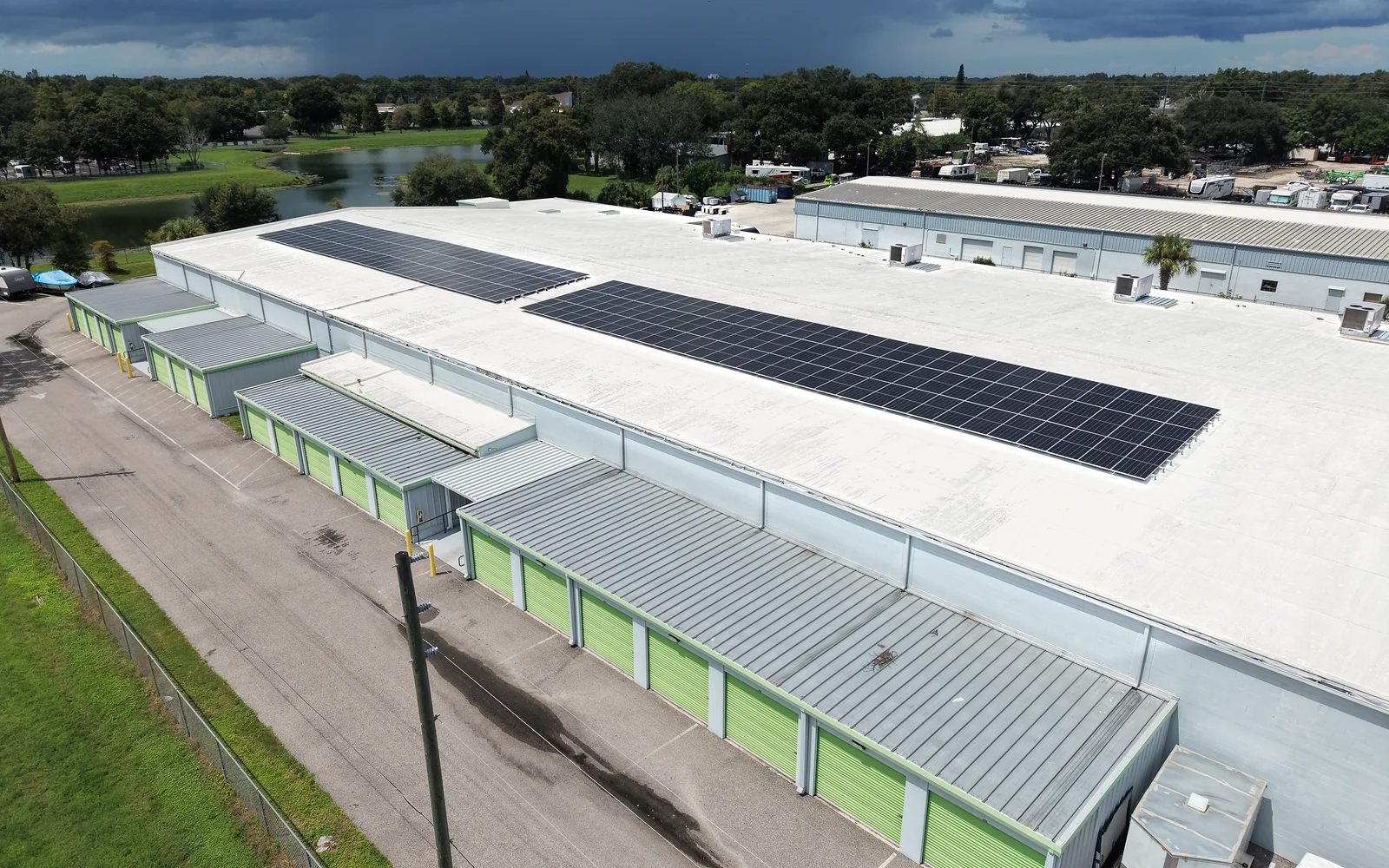
Usable roof area
Broad roof planes or canopy opportunities may support meaningful on-site generation.
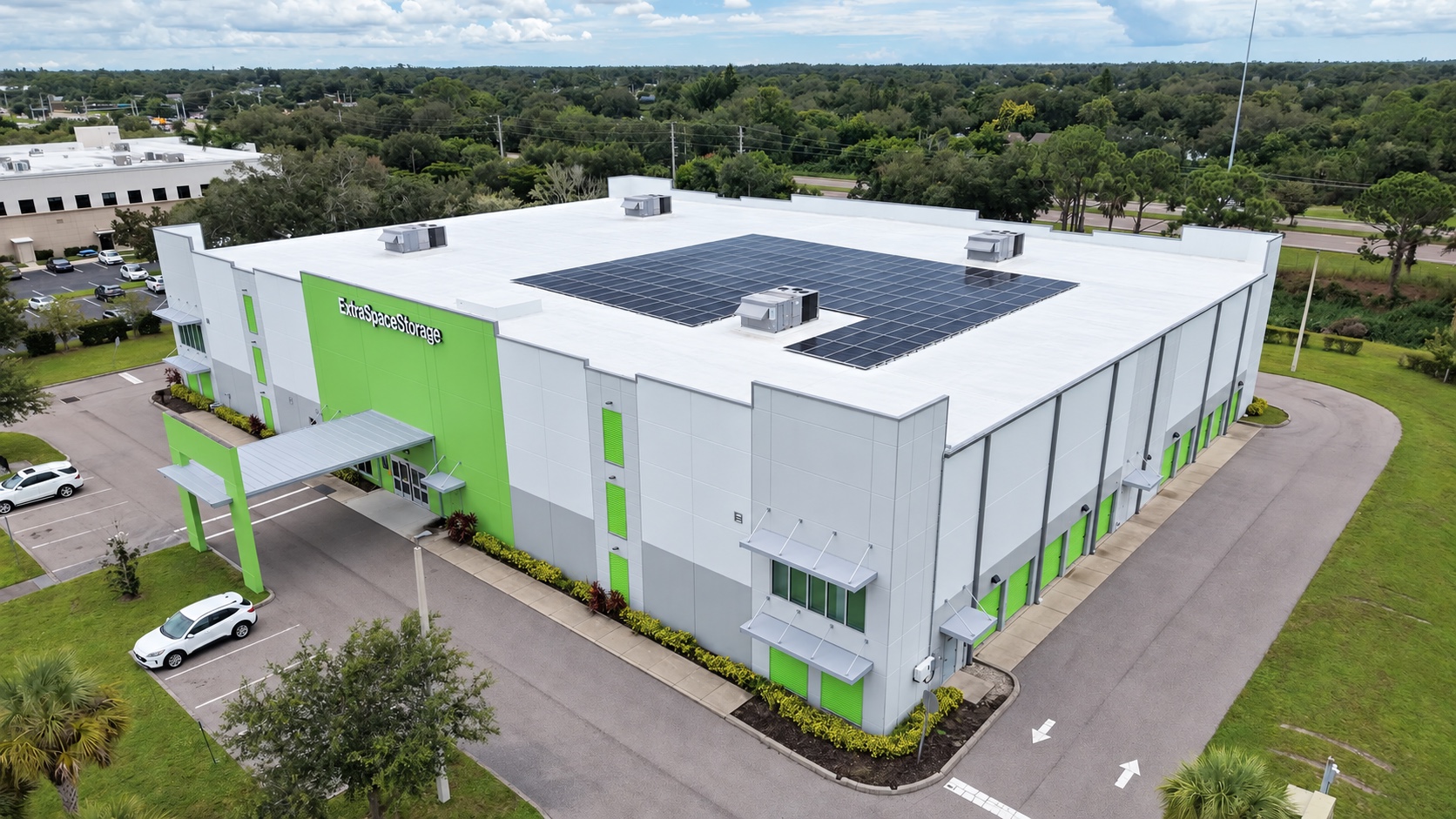
Self-Storage solar + electrical
Evolve helps self-storage owners determine whether solar can reduce utility exposure, improve cash flow, and support long-term property value.
Florida headquarters · Licensed in Florida and South Carolina · Southeast availability reviewed by location and scopeWhy self-storage
Self-storage can be a strong fit when roof area, electric load, utility rules, and ownership plans align.
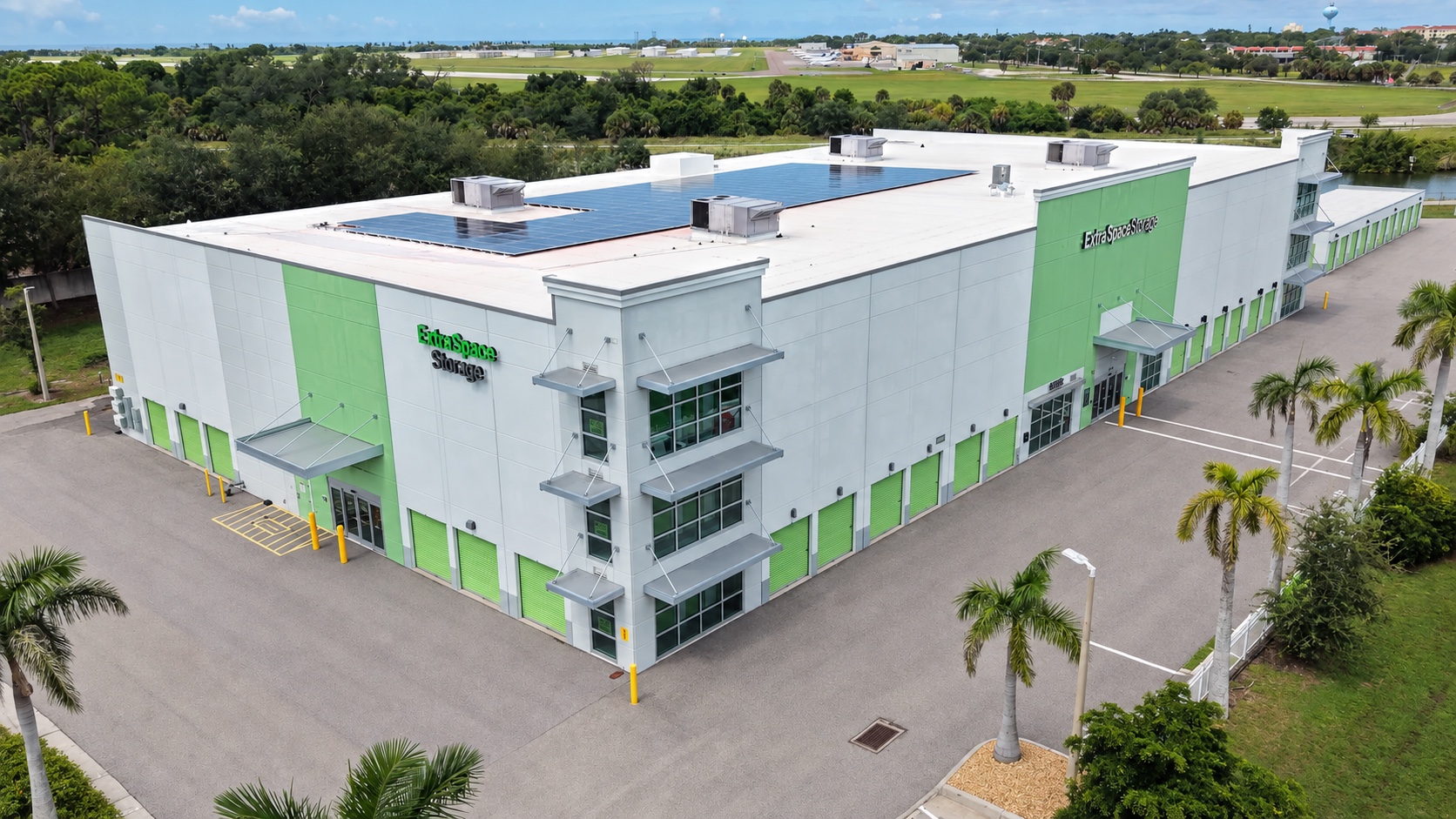
Broad roof planes or canopy opportunities may support meaningful on-site generation.
Lighting, gates, security, HVAC, offices, and climate-controlled space use power every day.
Reducing a controllable operating expense can strengthen cash flow and property performance.
Financing coordination
Through established commercial financing partners, eligible owners can preserve capital for acquisitions, development, and other investments.
Depending on project economics and lender terms, modeled monthly electricity savings may exceed financing payments—even before potential tax incentives. We also account for ongoing system costs to evaluate the actual cash-flow picture.
Evaluate my financing optionsFinancing is provided by third-party lenders, not Evolve Energy. Eligibility, covered costs, rates, fees, and payment terms are subject to lender approval. Savings and cash flow are property-specific and are not guaranteed.
Federal tax benefits
For a qualifying project and owner with sufficient tax capacity, the federal credit and depreciation may materially reduce effective project cost.
Assumes eligibility for the increased credit rate, including applicable labor rules or exceptions. The base rate is 6%; other restrictions apply.
With a 30% credit, half of that credit generally reduces basis, leaving 85% of eligible cost depreciable.
Eligible property acquired after January 19, 2025 may qualify, subject to project and taxpayer-specific rules.
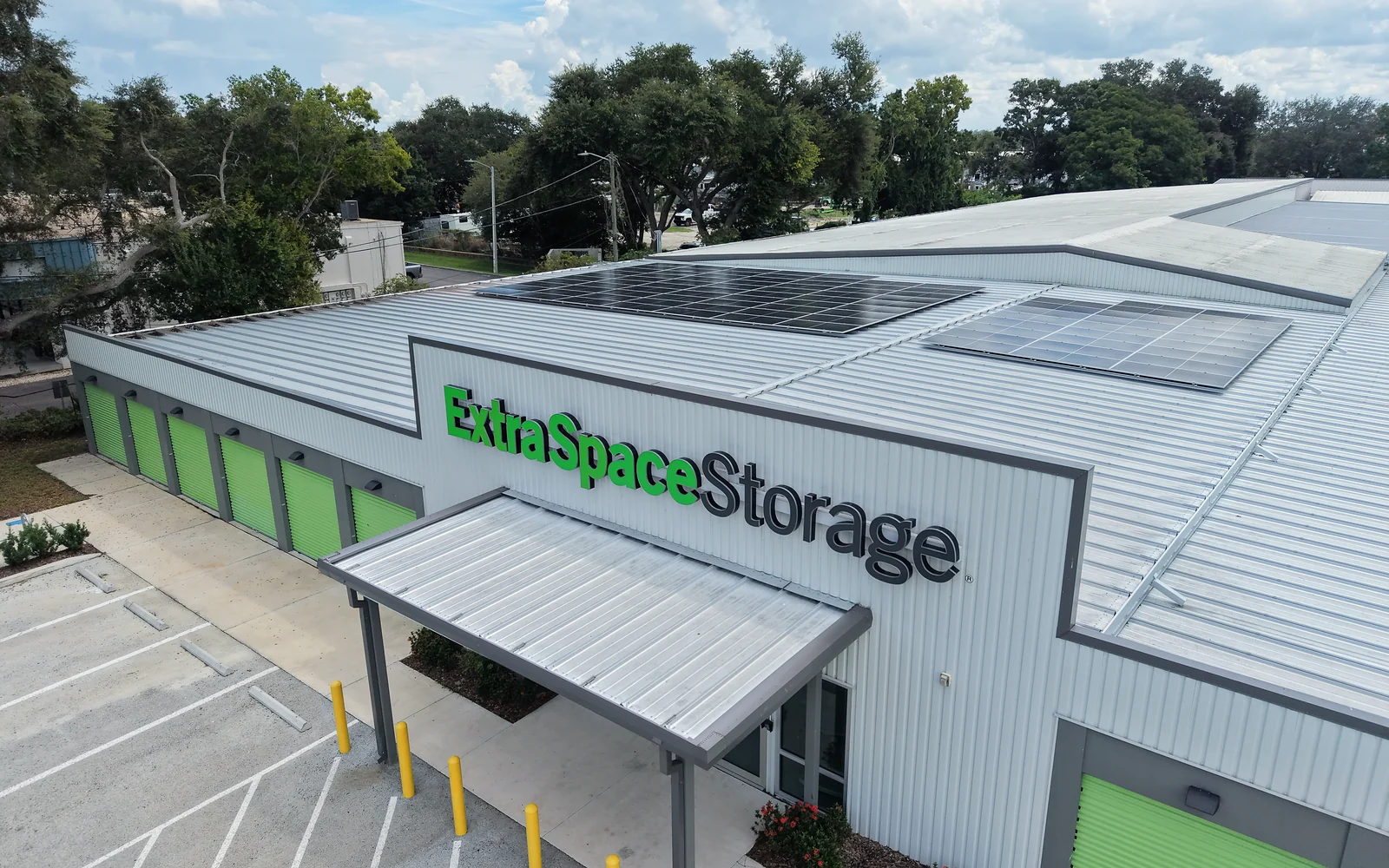
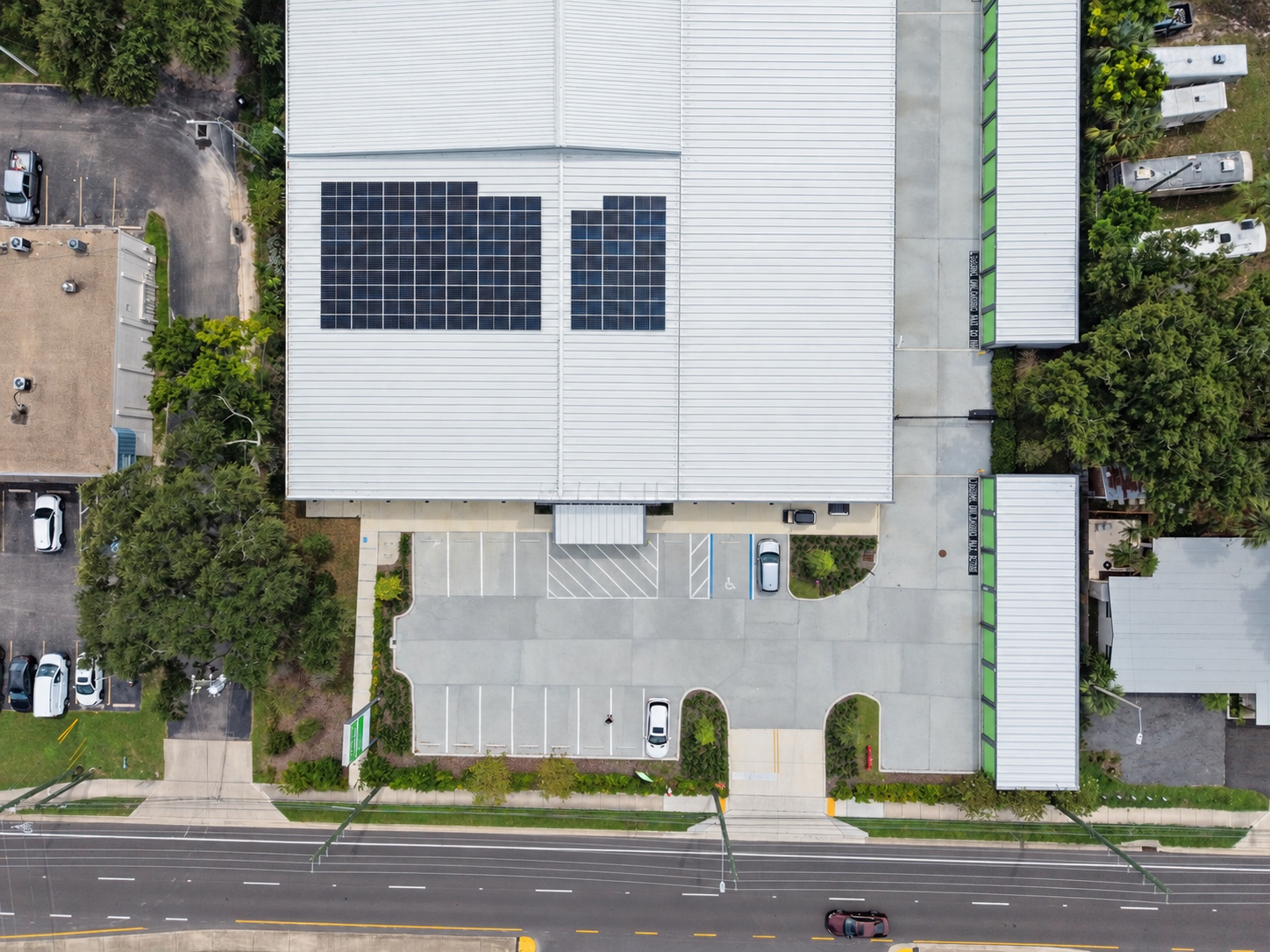
Featured project · Clearwater, FL
This Clearwater installation brings on-site solar generation to an existing self-storage roof. The facility combines a main storage building with surrounding drive-up units.
What could your roof contribute? Start with a property-specific energy assessment.
Request an Energy AssessmentTypical 100,000 SF facility
A typical 100,000-square-foot self-storage solar installation can often be completed in approximately two weeks while Evolve coordinates access, electrical work, shutdowns, and site logistics around the operating property.
This refers to typical on-site installation time. Engineering, permitting, utility approval, procurement, inspections, weather, roof conditions, and final scope affect the overall project schedule.Controlled work zones, tenant circulation, and life-safety systems.
Construction sequencing and required interruptions defined in advance.
Condition, warranty, structure, and replacement plans reviewed early.
Start-up, monitoring, documentation, and support responsibilities.
Solar operations & maintenance
Support expected production and financial returns with ongoing care for one property or a portfolio. Monitoring, inspections, maintenance, and cleaning are tailored to the selected agreement—not automatically included with installation.
Explore Solar O&MTrack production and identify performance issues.
Plan inspections, preventative maintenance, and cleaning.
Troubleshoot faults and coordinate corrective service.
Solar Q&A for Self-Storage
The essentials are here. An energy assessment puts the answers in the context of your property.
There is no responsible universal percentage. The answer depends on twelve months of usage, interval data when available, the utility rate and demand profile, usable roof or canopy area, shading, interconnection limits, and the facility’s operating pattern. Evolve models those inputs together so the owner can review a property-specific production and offset estimate rather than a generic savings claim.
Self-Storage Energy Assessment
Tell us where your property is and what you want to achieve. We review available utility bills, site conditions, electrical service, and ownership plans to evaluate solar potential, project economics, financing options, and long-term system care.
A screening-level view of system size, production, utility offset, budget, and key constraints—plus a practical next step. Not final engineering, a binding proposal, or guaranteed savings.